What to Expect From an Authentic Pizza Restaurant


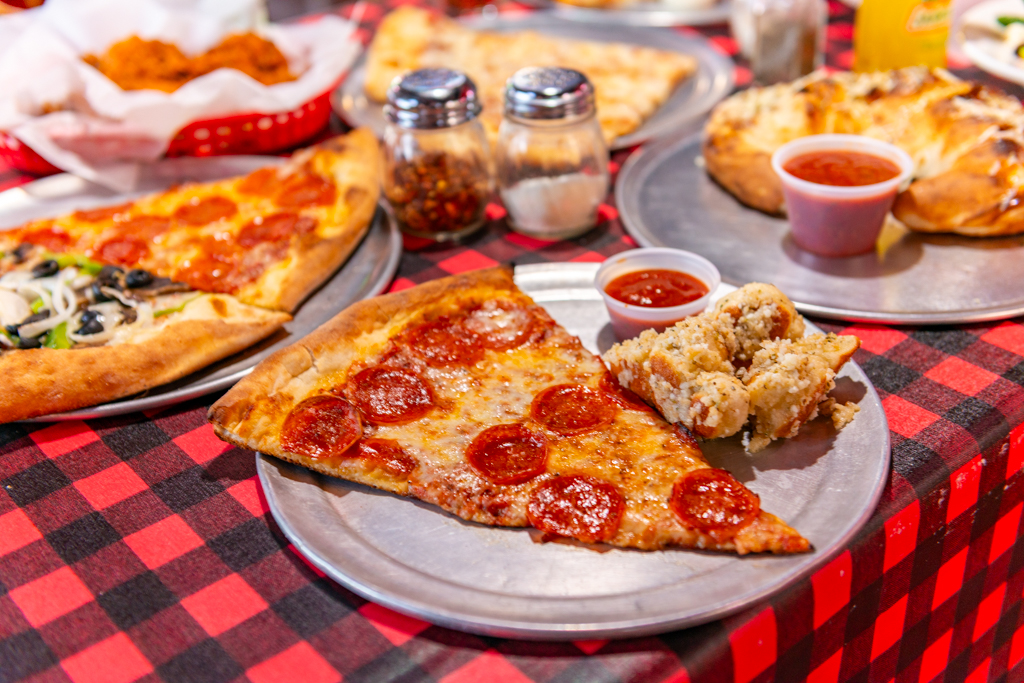
The phrase authentic pizza restaurant gets used so freely that it can lose meaning. A checkered tablecloth, an Italian flag by the register, and a wood-fired oven in the dining room do not automatically add up to authenticity. Real authenticity is more demanding than décor, and more interesting too. It shows up in the dough, the pace of service, the menu choices, the oven management, the sourcing decisions, and the way the restaurant respects tradition without turning it into theater.
If you have ever walked into a place that looked charming but served a floppy, underseasoned pie with gummy crust and anonymous cheese, you already know the gap between branding and craft. An authentic pizza restaurant does not need to announce itself loudly. You can usually sense it within a few minutes, sometimes before the first slice arrives.
What follows is not a romantic fantasy about old-world cooking. It is a practical look at what authenticity really looks like in a working restaurant, including the trade-offs and small details that separate serious operators from places that simply borrow the language of tradition.
Authenticity starts before the pizza hits the oven
Most diners judge a pizza at first bite, which makes sense, but authenticity begins much earlier. It starts with the dough program, because dough is where the restaurant reveals its priorities. A serious pizza restaurant treats dough like a living product, not a neutral base.
That means time matters. Good dough usually reflects a fermentation schedule with intention behind it. In some places that means a same-day dough handled with remarkable skill. In many others it means a longer proof, often overnight or beyond, to build flavor and improve texture. You do not need a server to recite the exact number of hours for the dough to be credible. What you want to notice is whether the crust tastes developed rather than flat, whether it has structure without heaviness, and whether the rim has both tenderness and elasticity.
The flour choice matters too, though not in a simplistic way. People often assume imported flour is automatically better. Sometimes it is the right choice, especially for styles rooted in Neapolitan tradition. Sometimes a skilled operator blends flours or uses domestic flour because it suits the oven, hydration, and service rhythm better. Authenticity is not blind loyalty to one ingredient. It is knowing why a particular flour is on the bench and what result it is supposed to produce.
You can often see clues from the open kitchen. Is the dough balled neatly and held with care? Are staff stretching it by hand or crushing it with a roller because the dough cannot support itself? A roller is not a crime in every context, but for many traditional styles it strips the dough of the gas and lightness the fermentation worked to create. In a strong pizza restaurant, the dough handling is confident and economical. No drama, no rough treatment, no panic.
The menu should show restraint
A menu tells you whether a restaurant understands the identity of its own food. Authentic pizza restaurants tend to edit themselves. They do not need forty-three topping combinations, three pages of novelty pies, and a handful of dishes that feel copied from unrelated restaurants.
That does not mean the menu must be tiny, or that innovation is somehow improper. It means the offerings should make sense together. A restaurant making Roman-style pizza by the slice will naturally look different from one serving Neapolitan pies or classic New York rounds. What matters is internal coherence. If you see a margherita, a marinara, a mushroom pie, perhaps a sausage and onion pie, and a few seasonal specials built around strong ingredients, that can be a very good sign. If every pie is overloaded with six meats, three sauces, and a name that sounds like a sports bar promotion, the restaurant may be chasing volume rather than flavor.
Restraint is one of the clearest marks of confidence. The best pizza restaurants know that the crust, sauce, cheese, and olive oil need room to speak. When every bite is buried under toppings, the pizza becomes a delivery vehicle instead of a finished composition.
There is also a practical side to menu restraint. Restaurants that keep a focused topping list often rotate inventory more effectively. That can mean fresher basil, better mushrooms, cleaner-tasting cured meats, and less of the tired, refrigerated fatigue that shows up in ingredients held too long. In a high-functioning kitchen, discipline on paper often leads to quality on the plate.
The sauce should taste like tomatoes, not sugar
One of the quickest ways to identify a weak pizza restaurant is to taste the sauce and find sweetness where brightness should be. Authentic pizza sauce is not one single formula, but it almost always respects the tomato. The goal is balance, not candy.
For some styles, that means uncooked or barely seasoned crushed tomatoes that retain freshness and acidity. For others, especially certain American regional traditions, the sauce may be cooked and more developed. Either way, the tomato should remain identifiable. You should be able to taste fruit, acid, and a touch of savory depth, not an overworked blend dominated by sugar, dried herbs, and garlic powder.
The same principle applies to quantity. Strong pizza shops understand proportion. Too much sauce makes the center wet and heavy. Too little can leave the pie dry and one-dimensional. The right amount depends on the style, but the judgment behind it is unmistakable. Good pizza feels composed, not assembled in a hurry.
A similar standard applies to cheese. Cheese should support the pizza, not smother it. In some traditions that means fresh mozzarella applied sparingly enough to avoid soaking the dough. In others it means a low-moisture mozzarella chosen for melt, browning, and stretch. You may also find pecorino, parmigiano, provolone, or regional cheeses used with purpose. Authenticity does not require one universal cheese choice. It requires awareness of how cheese behaves under heat and how it affects the balance of the whole pie.
Heat changes everything
A pizza oven is not a stage prop. It is the central tool that shapes nearly every quality a diner notices. When a restaurant advertises a wood-fired oven, that is only the beginning of the story. A wood flame can produce beautiful results, but only if the staff understands fire management, deck temperature, live heat, and timing. The same is true for gas and electric deck ovens, which can turn out superb pizza when run by skilled hands.
An authentic pizza restaurant knows its oven intimately. That sounds simple until you have watched service in a busy room. During a dinner rush, oven conditions change constantly. Floor temperature can drop, flames can shift, and back-to-back pies can expose weaknesses in dough management. Restaurants that lack discipline tend to produce erratic pizzas, one scorched on top, the next pale and dense, the third with a center that never quite sets.
Consistency under pressure is one of the strongest signs that a pizza restaurant is the real thing. You should expect slight variation because pizza is handmade and baked in real time. In fact, complete uniformity can be suspicious. But the essentials should be dependable. The crust should be properly baked, the toppings integrated, the bottom neither raw nor brittle, and the overall structure suited to the style being served.
This is where many diners confuse authenticity with spectacle. Char spots on a Neapolitan-style crust can be desirable. Burnt bitterness is not. A dramatic oven visible from the dining room may impress guests, but the pizza itself still has to show judgment. Real quality is quieter than marketing.
Service should feel informed, not rehearsed
You can learn a lot from how a server answers a simple question. Ask what style of pizza the restaurant specializes in, or what makes one pie different from another. In an authentic operation, the response is usually direct and grounded. You might hear that the dough ferments overnight, that the tomatoes are intentionally uncooked, or that a certain pie works best because the oven favors lighter toppings. The explanation should sound like knowledge, not a script.
Good service in a pizza restaurant is often underestimated. People assume pizza is casual, and it often is, but casual does not mean careless. Staff should know the menu, understand pacing, and guide expectations honestly. If a Neapolitan pie comes out soft https://cruzlnzg040.evercolumn.com/posts/how-a-pizza-restaurant-adapts-to-changing-food-trends-2 in the center and is meant to be eaten with knife and fork at first, the staff should be comfortable saying so. If a tavern-style pizza is cut into squares and built for a crisp bite, that should be presented as part of the restaurant’s identity, not as something to apologize for.
A thoughtful front-of-house team also protects the kitchen from confusion. They help guests choose pies that match their preferences. They explain why substitutions may be limited. They set realistic wait times during rush periods. None of this feels rigid when it is done well. It feels like professionalism.
One of the surest signs of authenticity is that the staff does not oversell. They let the food carry its own weight.
Tradition matters, but so does context
People often talk about authentic pizza as though there were one correct form. There is not. Pizza is a family of traditions, not a single fixed artifact. Neapolitan, Roman, New York, New Haven, Detroit, Sicilian, and tavern-style pizzas all have their own logic. An authentic pizza restaurant understands the tradition it is working in and stays faithful to the important parts without pretending that every detail must be frozen in time.
This matters because adaptation is part of restaurant reality. Climate affects dough. Ingredient availability changes by region. Customer traffic influences fermentation schedules and prep volumes. A pizzeria in Naples and a pizzeria in Chicago may both be authentic while making very different choices. The common thread is integrity. Each one should know what it is trying to be.
That also means authenticity is not the same thing as imported everything. A restaurant can use local produce, regional dairy, or house-made sausage and still remain deeply authentic if those choices serve the style honestly. In fact, some of the best pizza restaurants improve on tradition by respecting local agriculture and seasonality. A summer pie with ripe local tomatoes, basil, and fresh mozzarella can feel more alive than one built around expensive ingredients shipped in for the sake of appearances.
The weak version of authenticity is imitation. The strong version is understanding.
The room itself reveals a lot
Ambience should support the experience, not distract from it. Some authentic pizza restaurants are lively and loud, with open kitchens, quick table turns, and flour on the apron strings. Others are quieter, more polished, and paced for a longer meal. What matters is whether the room fits the food.
If the restaurant positions itself as a serious craft operation, you should expect signs of order. The tables do not need to be fancy, but they should be clean and set with intention. Plates, cutlery, napkins, and glassware should suit the style of service. If whole pies are the norm, there should be enough table space to manage them comfortably. If slices are a focus, the room may be more casual and fast-moving.
The sound and smell of the room matter too. A healthy pizza restaurant often has the warm scent of dough, tomatoes, cheese, and oven heat. That sounds obvious, but a room dominated by fryer oil or sweet bottled sauces can tell another story. So can the visual rhythm of service. Watch for whether pizzas are landing at tables promptly, whether staff move with familiarity, and whether guests appear to understand how to eat what they ordered. Small frictions usually point to larger ones behind the scenes.
Decor can be charming, but it should not be doing all the work. A vintage peel on the wall is not the same thing as a capable pizza maker on the line.
Expect some imperfections, but know the difference between character and sloppiness
A strong pizza restaurant is not a machine. Handmade dough varies slightly. Fire behaves differently from one hour to the next. Basil can darken in the oven. One crust may blister more than another. These are signs of a living process, not defects in themselves.
The line between character and sloppiness is judgment. A little asymmetry is normal. A collapsed center with raw dough is a problem. A few leopard spots can be appealing. Large patches of carbonized bitterness are not. Fresh mozzarella can release moisture. A puddled, soupy pie that cannot hold a slice has missed the mark.
This is worth emphasizing because authenticity can sometimes be used as a shield against criticism. Diners are told that a flaw is traditional when it is actually poor execution. A serious pizza restaurant does not hide behind that excuse. It knows the style and still aims for excellence within it.
If you are trying a restaurant for the first time, one useful test is to order something simple. A margherita, marinara, cheese pie, or plain slice leaves nowhere to hide. Fancy toppings can disguise mediocre fundamentals. Simplicity exposes them.
Price should make sense for the craft
Authentic pizza can be affordable, but it is rarely cheap in the careless sense of the word. Good flour, quality tomatoes, skilled labor, long fermentation, and proper ovens all cost money. So does rent in neighborhoods where strong pizza restaurants often operate. If a place is charging more than expected, the question is not whether the number is high in isolation. The question is whether the pizza and service justify it.
Sometimes they do. A restaurant using top-tier ingredients, maintaining a trained staff, and producing remarkable consistency may be worth a premium. Sometimes they do not. If the pie arrives with supermarket-level cheese, muddy sauce, and bland crust, authenticity is not part of the value equation.
The smartest operators are transparent through the food itself. They do not need to lecture diners about sourcing. You can taste where the money went. The crust has depth, the cheese has character, the olive oil contributes aroma, and the pie lands as a complete experience rather than a commodity.
A low price is not proof of compromise, either. Some neighborhood pizza restaurants achieve astonishing quality at moderate prices because they run efficient businesses, keep menus tight, and build loyal local volume. Authenticity can live in both a bustling corner shop and a destination dining room.
What a memorable pizza restaurant leaves you with
When a pizza restaurant is truly authentic, the experience lingers in a specific way. You remember the texture of the crust, the lift of the tomato, the way the heat transformed the cheese, the confidence of the staff, and the sense that the restaurant knew exactly what it wanted to be. Nothing feels random. Even the limitations make sense.
You may also notice what is missing. No overloaded menu. No gimmicky toppings competing for attention. No hard sell about tradition. No dependence on nostalgia as a substitute for quality. Just a coherent point of view expressed through dough, heat, ingredients, and hospitality.
That is what diners should expect from an authentic pizza restaurant. Not perfection in a sterile sense, and not some museum version of Italian cooking preserved under glass. You should expect skill, restraint, consistency, and honesty. You should expect a place where every decision, from fermentation to final bake, serves the pizza rather than the marketing.
A restaurant that delivers those things earns trust quickly. You stop wondering whether it is authentic because the question answers itself on the plate.
RUFFRANO'S HELL'S KITCHEN PIZZA Security
385 Main St, Colorado Springs, CO 80911
(719) 390-4355
FAQ About pizza restaurant
Is there a Hell's Kitchen pizza restaurant in Security-Widefield?
Yes. Ruffrano's Hell's Kitchen Pizza has a Security-Widefield location at 385 Main St.
Where can I find pizza delivery in Security-Widefield?
Ruffrano's Security location offers online ordering. Enter your address at checkout to check delivery availability and fees.
Where can I find gluten-free pizza in Security-Widefield?
Ruffrano's menu lists a 12-inch gluten-free option. Call the Security location to confirm availability and ask about shared equipment if cross-contact is a concern.